Discover The CALIZZ Trail, an immersive heritage walkthrough in Candolim, North Goa, exploring traditional Goan village life, Indo-Portuguese architecture, historical artefacts, sculptural art and centuries-old cultural traditions.
Experience the Goa of Yesterday at CALIZZ
Before Goa's liberation in 1961, village life followed a rhythm shaped by
community, tradition and the natural landscape. Quiet lanes, Portuguese-influenced houses, shaded courtyards, coconut groves and familiar village
rituals formed part of everyday life.
Mornings began with the sound of the poder, Goa's traditional bread vendor,
cycling through village lanes with freshly baked pão. Afternoons brought the
quiet of the siesta, while evenings were spent in courtyards, around family
gatherings and in conversations with neighbours.
This unhurried way of life is often associated with susegad, the Goan
philosophy of contentment, relaxation and enjoying life's simple pleasures.
At CALIZZ, an adults-only luxury heritage resort in Candolim, North Goa,
these memories are preserved through The CALIZZ Trail, a curated heritage
walkthrough celebrating Goa's history, architecture, art and cultural identity.
The experience invites guests to discover a different side of Goa, beyond its
beaches and nightlife, through the stories and traditions that shaped its
villages.
The Portuguese Courtyard: Indo-Portuguese Architecture and Heritage
The CALIZZ Trail begins at the Portuguese Courtyard, inspired by the
architectural character of traditional Goan homes.
Historically, courtyards provided natural light, ventilation and gathering spaces,
connecting the household with the surrounding environment.
At CALIZZ, the courtyard introduces guests to three distinctive heritage
installations.
The Pot of Thought celebrates Goa's writers, poets and storytellers,
recognising their contribution to preserving language, literature and cultural
memory.
The Bell of Resounding Love, described in the CALIZZ collection as dating to
1713, represents the historical significance of church bells in Goan
communities, where their sound once marked religious observances and
important moments of daily life.
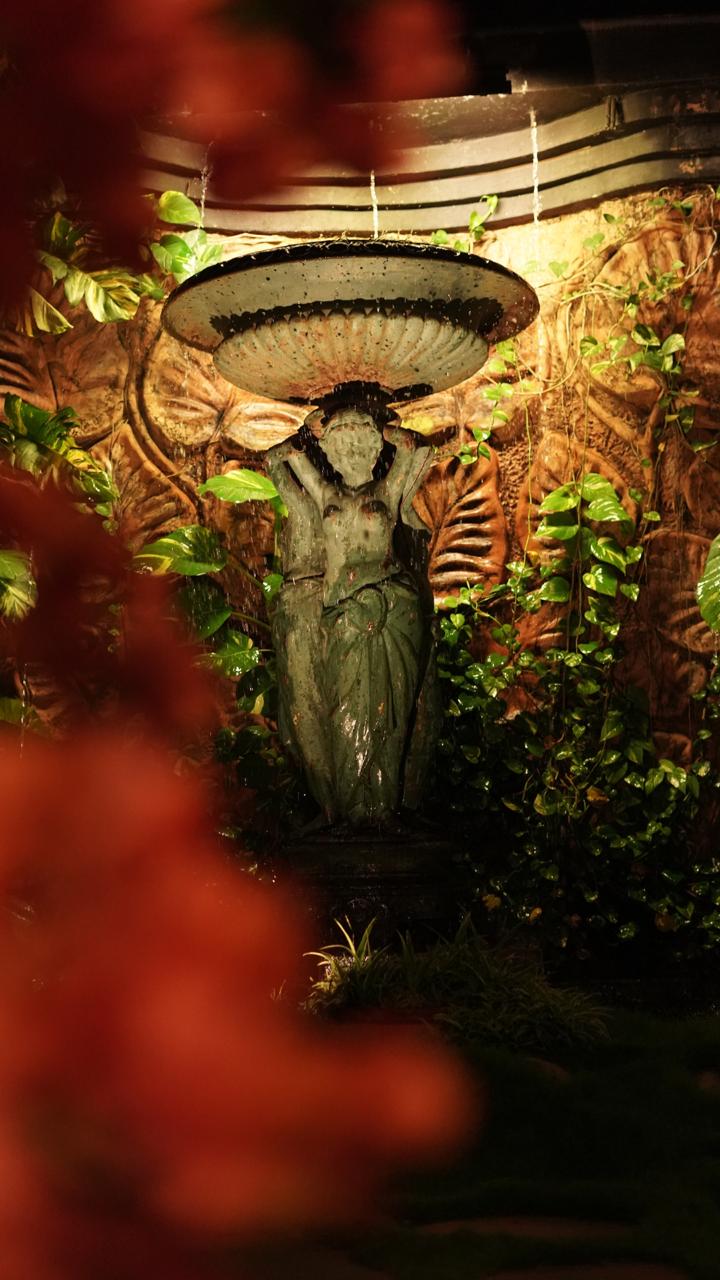
The Three Fountains of Caryatids draw inspiration from the 19th-century
Wallace Fountains of Paris, commissioned by philanthropist Sir Richard Wallace.
Their sculpted female figures reflect a classical architectural tradition
associated with generosity and public welfare.
At CALIZZ, the three fountains carry an additional artistic interpretation
representing Space, Time and Energy. Their symbolism draws parallels with the
Hindu Trimurti of Brahma, Vishnu and Mahesh, and the Christian Holy Trinity.
Together, these installations celebrate artistic expression, cultural harmony and
the diverse Hindu and Catholic traditions that have influenced Goa's heritage.
The Throne of Love and the Land Art of Goa
Continuing along the trail, guests encounter the Throne of Love, a sculptural
installation celebrating romance, creativity and feminine strength.
The journey then leads to The Land of Love, an artistic interpretation of Goa's
mythological origins and historical transformation.
The installation begins with the legend of Lord Parshurama, who, according to
traditional mythology, reclaimed land from the sea by releasing an arrow
towards the western coast of India.
The narrative progresses through the influence of the Kadamba and Chalukya
dynasties, the arrival of the Portuguese in 1510 and Goa's liberation in 1961.
This visual journey also honours everyday Goan traditions through ancestral
household and agricultural implements, including the rogdo, dantem and tovli.
These objects represent the skills and domestic practices passed down
through generations, particularly by Goan women, whose knowledge helped
preserve family recipes, food preparation methods and traditional ways of life.
Through art and historical storytelling, the installation connects Goa's
legendary beginnings with the communities and traditions that define its
cultural identity today.
The 250-Year-Old Banyan Tree Courtyard
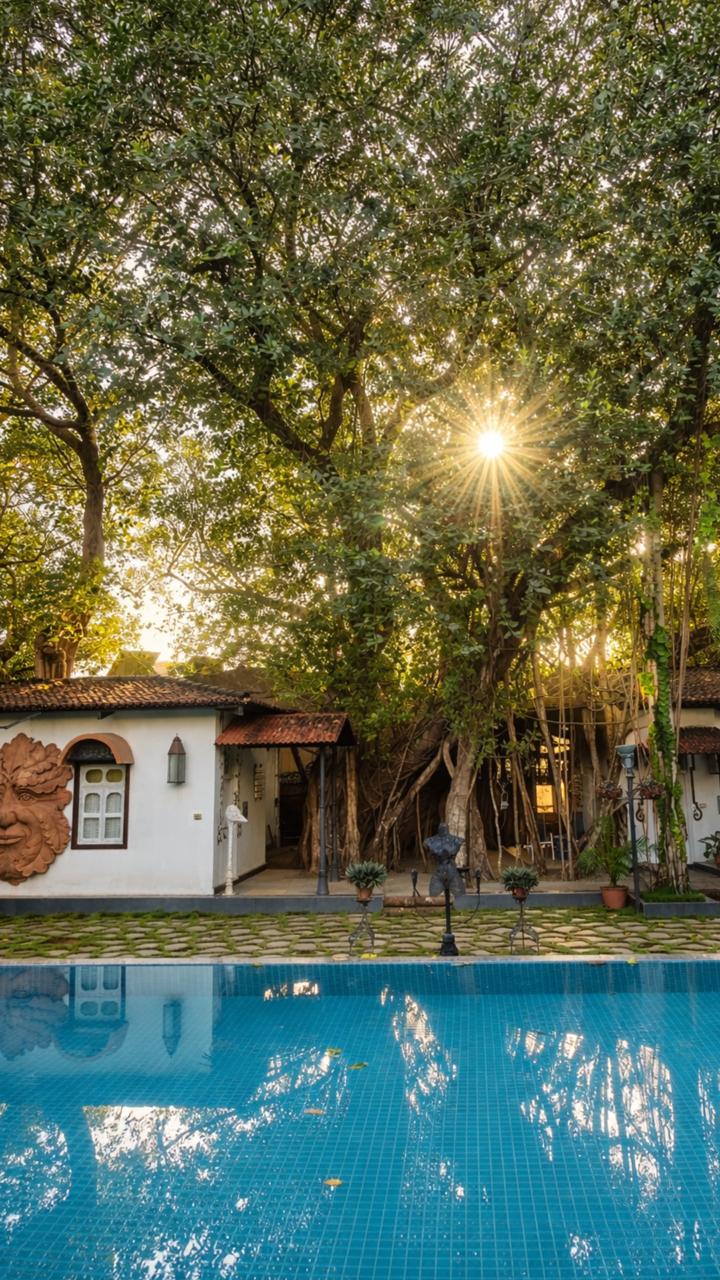
One of the most memorable stops on The CALIZZ Trail is the Banyan Tree
Courtyard, sheltered beneath a magnificent banyan tree believed to be
approximately 250 years old.
Its sprawling branches, aerial roots and dense green canopy create a peaceful
outdoor setting surrounded by the resort's heritage-inspired architecture.
The courtyard offers guests an opportunity to relax, admire the natural
landscape and experience the relationship between Goa's mature tropical
vegetation and traditional courtyard design.
The tree stands as a living connection to the past, its natural presence
contributing to the resort's peaceful atmosphere and distinctive character.
Traditional Goan Village Architecture and Mud Sculptures
As the trail continues, visitors discover architectural details inspired by historic
Goan village houses.
Mud-tiled roofs, shaded verandas, rustic surfaces and interconnected
pathways reflect the design traditions that characterised many old Goan
residences.
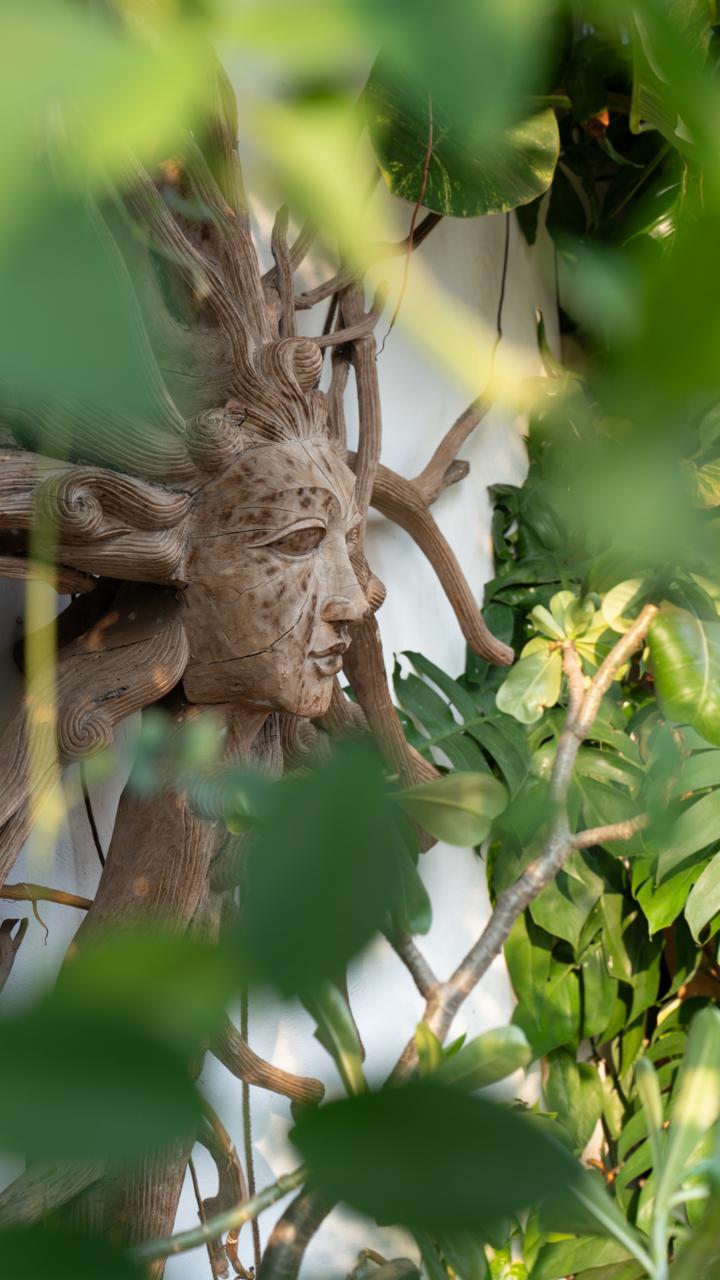
Along the pathways stand monumental sculpted mud faces, some weighing
approximately two tonnes. Their expressive forms explore different aspects of
human emotion, including sensuality, desire, mystery, passion and romance.
The contrasting white walls draw attention to another element of Goa's colonial
architectural history. During Portuguese rule, whitewashed churches and
religious buildings held a distinctive place in the visual landscape, while
traditional private homes were often finished in vibrant colours.
Together, the architectural details and sculptures create an environment where
art, history and imagination become part of the guest experience.
The Traditional Mud House and Sacred Tulsi
The CALIZZ Trail also features a traditional mud house described as
approximately 250 years old, accompanied by a sacred Tulsi plant.
Mud houses formed an important part of vernacular architecture in Goa and
other parts of India, making use of locally available materials and construction
techniques suited to regional conditions.
The Tulsi plant holds particular significance in Hindu households, where it is
traditionally associated with purity, devotion and spiritual protection.
The practice of lighting an oil lamp near the Tulsi plant at dusk continues to be
an important domestic ritual in many homes.
This installation honours the relationship between architecture, nature and
everyday spiritual traditions in Goa.
The Gothic Garden: Nature-Inspired Architecture and Dining
The heritage walkthrough continues into The Gothic Garden, a distinctive
outdoor dining space inspired by the natural forms of a banyan tree.
Its handcrafted mud pillars resemble intertwined roots and climbing vines,
combining organic architectural design with traditional craftsmanship.
Surrounded by tropical greenery and curated heritage artefacts, the garden
provides an intimate setting for dining, relaxation and conversation.
The Gothic Garden reflects the CALIZZ philosophy of bringing together nature,
architecture and hospitality to create memorable guest experiences.
Abbé Faria: Goa's Pioneer of Hypnotism
Among the sculptures encountered along the trail is a tribute to Abbé Faria,
the Goan-born priest and pioneer of the scientific study of hypnotism.
Born in Candolim, Abbé Faria became internationally recognised for his work on
hypnotic suggestion and the influence of the human mind.
His presence within the CALIZZ heritage experience celebrates Goa's
intellectual and cultural contributions beyond its architectural and culinary
traditions.
The sculpture also creates a connection between the resort and the historical
figures associated with Candolim.
A Curated Heritage Experience in North Goa
The CALIZZ Trail is designed as more than a conventional resort walkthrough.
It brings together historical artefacts, sculptures, traditional architecture,
cultural symbolism and natural surroundings to tell the story of Goa through a
series of interconnected spaces.
From the Portuguese Courtyard and the Three Fountains of Caryatids to the
Land of Love, the ancient banyan tree, traditional mud house and Gothic
Garden, each landmark contributes to the wider experience.
Located in Candolim, CALIZZ features 16 individually themed suites inspired by
art, heritage, romance and storytelling.
The heritage trail complements the resort's distinctive bed-centric hospitality,
allowing guests to discover the cultural influences behind its architecture and
design.
For travellers seeking authentic Goan heritage experiences, unusual cultural
attractions and personalised luxury hospitality in North Goa, The CALIZZ Trail
offers an intimate introduction to the spirit of old Goa.
At CALIZZ, The Trail is a journey through Goa's past, where history is preserved, stories are rediscovered and the traditions of yesterday become part of today's experience.
Discover The CALIZZ Trail, our heritage collections and 16 individually themed suites at www.calizz.com — CALIZZ, The Heart of Goa.